Showing posts with label learning. Show all posts
Showing posts with label learning. Show all posts
Wednesday, November 21, 2012
Woolly What Now?
What: Woolly Alder Aphids!
Where: I found these on the underside of branches on a small alder tree by Spring Lake (west of the Minneapolis Sculpture Garden about a quarter mile).
When: November 21, 2012 at 8:15 am
Observers: Abbie --- I was captivated . . . and more than a little creeped out. What on earth is this bizarre stuff? Was it fungus? Something man-made? Or something unearthly and alien, which seemed just as likely. So I contacted a professional naturalist friend of mine who identified these Woolly Alder Aphids.
Conditions: Breezy and brisk

Thursday, July 26, 2012
Attention as Place: Surveying One Square Meter
If you follow the Walker Art Center via blogs, Facebook, or Twitter, you've caught word of ROLU-in-Residence. When I heard that a component of ROLU's residency bears the title "Attention as Place," I was intrigued. Notions of "attention" and "place" are at the core of Open Phenology.
"Attention as Place" is a showcase of interactive and intellectually compelling projects culled from ROLU's Web-based network and temporarily localized in the Walker's Cargill Lounge. While most works in this showcase have a physical aspect, they are more fundamentally about the intangible, the indeterminate, the speculative, or the experiential. And for that reason, viewers can have an intimate, give-and-take experience with any of the 22 projects that compose "Attention as Place."
Take, for instance, Amy Franceschini's SURVEYING ONE METER, an action-based project with the following prompt:
 Look for the roped-off One Square Meter at the base of Open Field's hill, near the parking ramp entrance.
Catalog in writing everything you see in a one meter square in Open Field. This could be a text, a poem, or a list. Get as detailed as possible.
Since Tuesday, I've completed two surveys of the square meter, each time depositing my written observations in a designated box in Cargill Lounge. You are welcome to participate in Franceschini's SURVEYING ONE METER. Visit the Walker's Cargill Lounge where a staff person will give you a clipboard with paper and pencil. Venture out to the square meter and tell us what you see.
"Attention as Place" is a showcase of interactive and intellectually compelling projects culled from ROLU's Web-based network and temporarily localized in the Walker's Cargill Lounge. While most works in this showcase have a physical aspect, they are more fundamentally about the intangible, the indeterminate, the speculative, or the experiential. And for that reason, viewers can have an intimate, give-and-take experience with any of the 22 projects that compose "Attention as Place."
Take, for instance, Amy Franceschini's SURVEYING ONE METER, an action-based project with the following prompt:
Catalog in writing everything you see in a one meter square in Open Field. This could be a text, a poem, or a list. Get as detailed as possible.
| The parameters of Franceschini's project calls to my mind The Forest Unseen (book trailer, left) by David G. Haskell. And though the Walker's Open Field is no old growth wilderness, Franceschini's project urges us to see it as it is, how it is, and where it is. Like Open Phenology, Franceschini's project is based on the ethos that our immediate environment has great potential as the stage for re-enchantment and discovery. |
Since Tuesday, I've completed two surveys of the square meter, each time depositing my written observations in a designated box in Cargill Lounge. You are welcome to participate in Franceschini's SURVEYING ONE METER. Visit the Walker's Cargill Lounge where a staff person will give you a clipboard with paper and pencil. Venture out to the square meter and tell us what you see.
Saturday, January 7, 2012
Wondering about Winter?
The whys and hows of winter are addressed and celebrated on Science Friday: http://www.sciencefriday.com/program/archives/201201065
Tuesday, November 8, 2011
Honk If You Love
Canada Geese! Arriving to work this morning, I counted zero geese on the field. (But evidence of their recent "occupation" was scattered generously underfoot, if you know what I mean.) As we wound our way into the offices, my colleague Christopher and I chatted about the phenomenon—how the passing weeks saw their numbers increase, peak, and then diminish. Where are they now?
Where do Canada Geese go? As you've probably noticed, some of them will stick around over the winter months. But most of them make their way to the mid and southern United States. Here's a link to a distribution map, on Wikipedia: http://en.wikipedia.org/wiki/File:Branta_canadensis_map.png.
Four more facts about the Canada Goose:
Where do Canada Geese go? As you've probably noticed, some of them will stick around over the winter months. But most of them make their way to the mid and southern United States. Here's a link to a distribution map, on Wikipedia: http://en.wikipedia.org/wiki/File:Branta_canadensis_map.png.

Four more facts about the Canada Goose:
- Scientists have tracked geese that have flown up to 1,000 km in a day. (You didn't expect a figure in miles, did you? Of course it would have to be metric since they're Canada Geese. 1000 km = 620 miles, approximately)
- Maybe to you or me all Canada Geese look the same, but most scientists believe that there as many as eleven different races.
- Canada Geese are monogamous and most couples stay together all of their lives.
- The Canada Goose was once considered endangered. Game laws and habitat preservation programs have turned that around so effectively that they are now sometimes considered a pest.
Sunday, October 9, 2011
Wait, wait—what season is it?

Where: Lake of the Isles (click here for map)
Observers: Abbie and Mary
Date/Time: 10:30 am, Sunday, October 9
Conditions: Unseasonably warm, the day's temperature was to reach 80°

Is this an "autumn blooming cherry," or is has the tree's clock been confused by recent weather patterns?
Tuesday, September 6, 2011
Field Trip: Birding with Nathalie and Hans
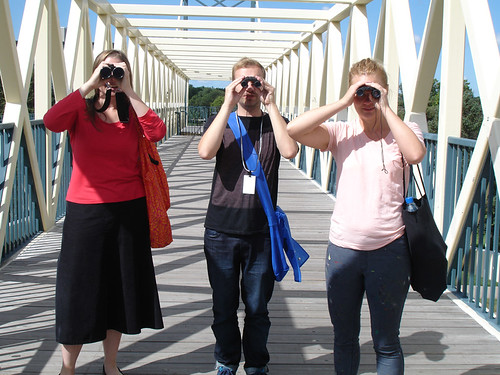 |
| Left to right: Abbie, Hans, and Nathalie |
Our excursion began at the picnic tables as Abbie distributed binoculars and describes Open Phenology, her series of nature walks focused on observing ecological phenomena in the Walker’s vicinity.
Abbie: I’m interested in noticing the life forms around us and observing how they change through the seasons. This means looking for birds migrating, insects molting, flowers blooming, etc. These observations, in turn, are the basis for conversation and learning.
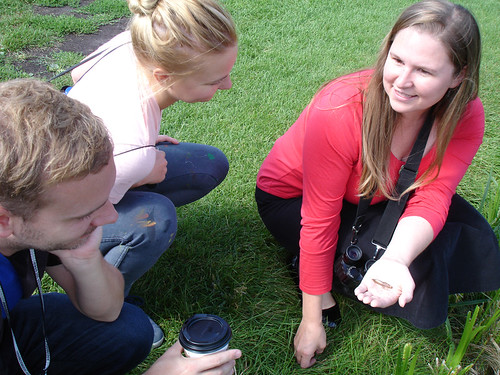
Abbie: See these?
Hans: Like ghosts.
Abbie: Larvae is actually Latin for ‘ghost.’
Hans [on metamorphosis]: It’s like one-day evolution.
Nathalie [clearly curious as to why an art educator takes such interest in biology]: So, what exactly do you do at the museum?
Abbie: Yes, I see what you mean. I’m a biology geek who works in an art museum. So beyond my job, which is supporting the Walker’s education and community programs, I’ve appointed myself as the Walker’s in-house amateur naturalist.
 |
| The Parade: Nathalie Djurberg with music by Hans Berg |
Susy: Why birds?
Nathalie: Before, birds were the least interesting to me—flock animals. Boring. I love animals and watch a lot of nature programs, but avoided bird programs. Then I came across David Attenborough.
Abbie: His documentary on birds of paradise?
Nathalie: Yeah, that guy!
Abbie: After watching Attenborough in Paradise, I felt like this planet is suddenly a totally different world! An astonishing place, but weird, right?
Nathalie: Yeah, though it was before that one that I got into him. And it changed how I see birds. I had no empathy for birds before. Now I really do.
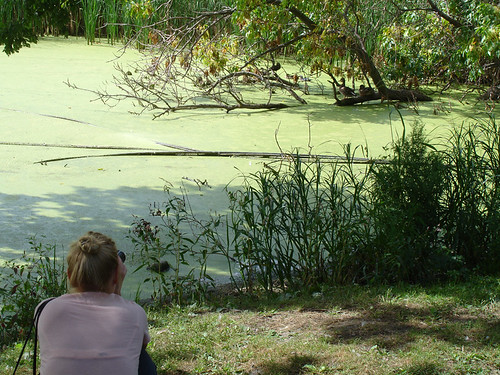
Abbie [chasing after Nathalie]: I love the investigative impulse!
Abbie [catching up and training binoculars]: You can recognize the Wood Duck by size and shape as well as by its plumage. Their nesting habitat is a tree cavity. Now we build boxes to help them out.
Hans: Are they rare?
Abbie: They’re not too rare, but many birds nest in dead trees, which we cut down. There’s a dead tree by my house that every morning is full of woodpeckers. It’s marvelous to see them. It’s a dead tree, but it’s living to them, because it’s full of bugs.
Nathalie [focusing her binoculars on a male Wood Duck]: Look at its eyes! They’re bright red.
Abbie: The Wood Duck is the showiest bird here.
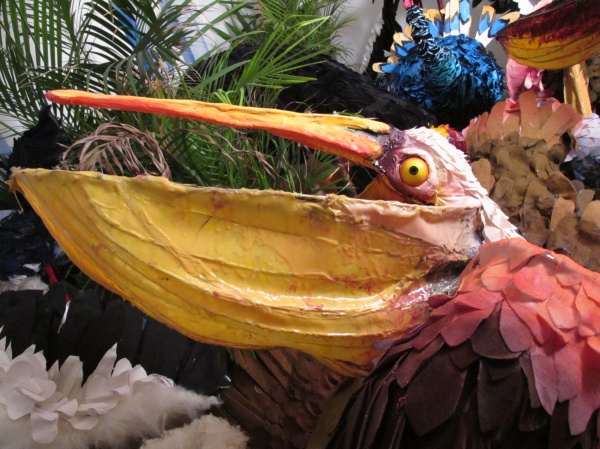 |
| Nathalie Djurberg, studio view of a work in progress, 2010 Courtesy the artists, Zach Feuer Gallery, New York and Giò Marconi, Milan |
Susy: How much of your birds come from actual birds in the world, and how much are derived from sheer imagination?
Nathalie: Most started by my looking at pictures, then really transformed in the process of making them. There were about thirty that came from my imagination. The rest were something specific at the start. Some have transformed so much I couldn’t recognize how they started.
Susy: How do you chose your birds?
Nathalie: I choose the ones I find interesting. Their personalities. How they move their heads. Their colors and patterns.
To witness the pageantry of these feathered forms with your own eyes, venture into the Walker’s Burnet Gallery—The Parade is on view through December 31. In addition to a flock of over eighty delightfully varied bird sculptures, the walls are brought to life by a selection of the artists’ claymation films and the entire space is awash in Hans’ music.
Birding and conversing with Nathalie and Hans has amplified my enjoyment of the show, which is emphatically rich and wild as it is. But after discovering a shared enthusiasm for Attenborough’s BBC documentaries, I found myself thinking, “Wouldn’t David Attenborough just have a field day here!” In a flight of fancy, I imagine a gallery tour led by Attenborough: Clad in khakis with a field guide in his vest pocket, he trains his binoculars on the multitude of exotic species. His hushed voice can hardly contain the exhilaration of catching sight of such strange birds. And lucky for us, this episode of Attenborough’s adventures doesn’t entail travel to an inaccessible tropical paradise, but unfolds in our own back yard.
—Co-authored by Abbie Anderson and Susy Bielak
Friday, August 12, 2011
While You Were(n't) Looking

Where: Pond perimeter, near Spoonbridge and Cherry
Observers: Abbie (and, via Internet, Kurt Mead, MOSP educator and scientist, who identified this insect by species name)
Date/Time: Friday, August 12, 10:20 am
Conditions: Overcast and 70°-ish
 |  |  |
Where: Arlene Grossman Memorial Arbor and Flower Garden, north edge of the Minneapolis Sculpture Garden
Observer: Abbie
Date/Time: Friday, August 12, 10:30 am
Conditions: a-buzz with insect pollinators and pests
 |  |  |
Where: Minneapolis Sculpture Garden and The Grove (entrance to the Walker off Vineland Place)
Observer: Abbie
Date/Time: Friday, August 12, between 10 and 11 am
Conditions: Warm and overcast—insistently summery with incipient signs of autumn
Friday, August 5, 2011
Noisy Streets and Quiet Gardens

The morning of August 5th was a hot one. Two brave phenologists were not deterred. We met at the FlatPak House, and feeling bold, decided to make a trip across the Armajani bridge to Loring Park. Our plan was take the stroll and observe carefully, embracing the time in our morning to appreciate our surroundings. As we walked up the steps we were struck with the loud roar of traffic from below. The sound and speed of the moving cars took on a different meaning from our elevated prospect. We reflected on the chaos of everyday life, and became more aware of the drone of noise always around us in a city. From this position we even spotted some sunflowers on the side of the road. Such a thing would surely go unnoticed from our car. We were off to great start!


The sound of traffic went as suddenly as it came. Once across the bridge we were greeted with green grass and peaceful quiet. In the morning heat the park was lush and filled with many shades of green. Tall grasses and cattails had completely overtaken a section of the pond. Not even a patch of open water could be seen. In them we heard the rusting of birds and other animals. It seemed a nice and shady spot for many small critters.


Our stroll through the park gave us an opportunity to appreciate the overwhelming amount of growth during the season. Beautiful flowers were everywhere as were mallards and butterflies. As we made our way back to the bridge we felt energized and rejuvenated from the trip. Taking in our surroundings in this way was refreshing. We discussed how easy it is to miss all the exciting things happening in your immediate surroundings. As we climbed up the steps, my fellow phenologist commented that the sky looked unmistakably of summer. I agreed and we wondered if our conclusion was due to context or if we were on to something. Does the look of the sky really change through the seasons? If so, in what ways? Readers, if you were to picture a quintessential summertime sky, would it look like this?

Friday, July 29, 2011
Simulated Soundwalk
A soundwalk is any excursion whose main purpose is listening to the environment. Today I was joined by Brian, a friend, composer, sound engineer, and educator. The sound collage below roughly represents a few of the auditory sensations along our path through the Sculpture Garden. (And just like in real life, some of these sounds are soft and others a little louder...)
Above: YouTube media by waitingline
Above: Vimeo media by Maureen Mcsmith
Above: YouTube media by jkontrad
Above: YouTube media by Greg Holmes of thelope.com
Above: YouTube media by yaaren
What: Part of our process was imagining how the Walker's sound environment changes through the seasons. For example, by late July, the Red-Winged Blackbirds don't sound like this anymore. A detailed map of our soundwalk is available here, with descriptions at each placemarker. If you're interested in trying a soundwalk on your own, here is a suggested 'score' I adapted from an essay by Hildegard Westerkamp. Additional thanks to Frauke Behrendt for support and resources.
Where: Minneapolis Sculpture Garden
Observers (Listeners): Abbie and Brian
Date/Time: Friday, July 29, 10 to 11 am
Conditions: Hot, sunny, sonic
Above: YouTube media by waitingline
Above: Vimeo media by Maureen Mcsmith
Above: YouTube media by jkontrad
Above: YouTube media by Greg Holmes of thelope.com
Above: YouTube media by yaaren
What: Part of our process was imagining how the Walker's sound environment changes through the seasons. For example, by late July, the Red-Winged Blackbirds don't sound like this anymore. A detailed map of our soundwalk is available here, with descriptions at each placemarker. If you're interested in trying a soundwalk on your own, here is a suggested 'score' I adapted from an essay by Hildegard Westerkamp. Additional thanks to Frauke Behrendt for support and resources.
Where: Minneapolis Sculpture Garden
Observers (Listeners): Abbie and Brian
Date/Time: Friday, July 29, 10 to 11 am
Conditions: Hot, sunny, sonic
Friday, July 8, 2011
You gonna' eat that?
Open Phenology collaborator Sarina was our guide to the veritable supermarket of the urban Loring Park.
Photos, left to right: Pepperweed by Dan Mullen; Dock weed by Abbie; Wood sorrel by Judi Cox; Arrowhead by Dave
Thinking of plants in these terms (edible/non-edible) must play a role in learning, because Sarina was identifying plants left and right, up and down, and sharing this knowledge with other eager participants.
Care to join us for dessert? Perhaps later this season we'll harvest some goldenrod galls. Here's a fact that's hard to believe (but easy to remember): Inside each gall is a larval fly absorbing sugar from the plant, and if you get it at the right time of year, it's a sweet treat! That's right—to eat!
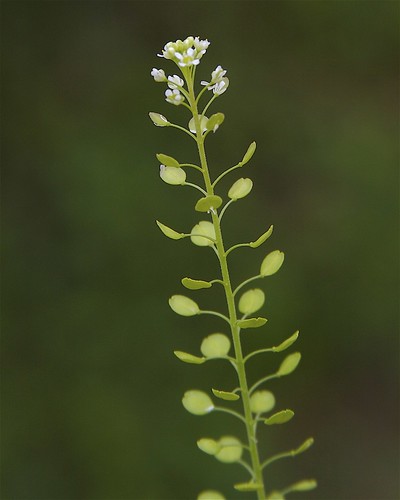 |
| Pepper/Spice? |
 |
| Cereal? |
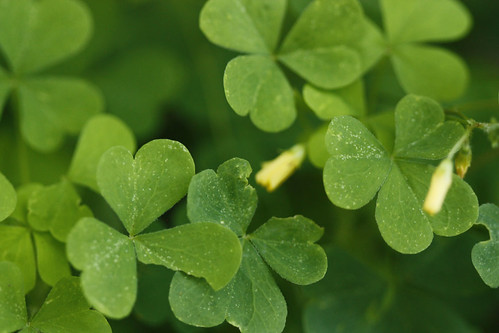 |
| Tangy greens? |
 |
| Duck Potato? |
Thinking of plants in these terms (edible/non-edible) must play a role in learning, because Sarina was identifying plants left and right, up and down, and sharing this knowledge with other eager participants.
Care to join us for dessert? Perhaps later this season we'll harvest some goldenrod galls. Here's a fact that's hard to believe (but easy to remember): Inside each gall is a larval fly absorbing sugar from the plant, and if you get it at the right time of year, it's a sweet treat! That's right—to eat!
What else did the ten of us see today? Click here to review some of our observations.
Guest Blog: Scott Artley joins in on July 8th

On the morning of July 8th, seven people stood at the FlatPak House on the West end of the Minneapolis Sculpture Garden, looking much like some of the other tourists wandering through the area. Only instead of capturing photos of artworks, they donned binoculars to catch a momentary glance of birds. Instead of maps filled with the names of public artists, they held pocket-sized plant identification handbooks and ornithology guides.
Abbie greeted us and explained the concept of phenology: the study of the natural world through the seasons, seeking markers of time and change. It’s a science requiring sustained attention to subtlety—an artistic eye is an asset to environmental inquiry. Abbie’s mantra during the excursion was simple: “What do you notice?”
Although I went to Open Phenology to learn about the natural world around the Walker Art Center campus, I found myself fascinated by the way this group became a community as we wandered over the Whitney Bridge into Loring Park. Although Abbie’s is the only Open Field project that engages with the world of science, it does demonstrate aspects familiar to other Open Field activities:
- the facilitation of curiosity
- an ongoing commitment of time and space to step out of the everyday, and
- the ultimate outcome of sharing an experience together.
Thanks for inviting me along, Abbie, I’m looking forward to joining again.
--Scott Artley
Open Field Coordinator and Open Phenology guest blogger
Open Phenology print by Abigail Woods Anderson
Friday, June 24, 2011
Going West in Search of Wild
 |
| Open Phenology collaborator Jim shares his field guide and expertise. |
 Well, that begs the question: "What is wild?" What do terms like 'wilderness' or 'nature' denote, and what do we mean to exclude by using these words? It's an enigma to ponder because 'nature' seems to encompass everything, and yet most of us harbor the notion that nature has boundaries.
Once outside the urban yard's monoculture and the garden's cultivated display, does the land revert to its natural state? To the casual glance, perhaps it appears so. But upon examination, the answer is emphatically no. At every turn, introduced species were flourishing. And so we challenged ourselves to piece together, through observation and speculation, a semblance of this ecosystem's 'natural state.' And we wondered about the near future of this piece of land. Would our city or this neighborhood support and sustain the maintenance work necessary to keep invasives at bay?
What: Select observations described below
Where: Less than 1/2 mile west of FlatPak House, map above
Observers: Abbie, Jim, Martha, Renner
Date/Time: June 24, 10 to 11:30 am
Conditions: Sunny and warm
- Cottony wisps (likely cottonwood and aspen seeds) are aloft and litter the ground (Related resource: 'Plant profile' video about the cottonwood)
- Motherwort, flowering
- Cow parsnip, stalks are tall (some about 6') and seeds are forming (Related vocabulary: Umbel)
- Garlic mustard, second year plants have seed pods (Related resource: Why this plant is an ecological threat and what to do about it)
- Garlic mustard, first year plants are only basal rosettes, with no tall flowering stalk (Related hypothesis: We encountered a plot of exclusively first year plants and speculated that it might be the leading edge of the invasion)
- Elderberry plant, flowering
- Elderberry plant, berries ripening
- Deadly nightshade, flowering
- Jack-in-the-pulpit, berries ripening but still very green
- Mulberry, fruits ripening, but many are still pale
- Fleabane, flowering, a small bee (~3 or 4mm) observed
- Burdock, stalks are about 3' and still no flowers, aphids are observed on some individual plants
- Buckthorn, fruits ripening, but still green (Related resource: Why is buckthorn such a problem and what you can do about it)
- Spittle bug, shrouded in its spittle foam
- Wild ginger, flowers appear to be fading
- Wild sarsaparilla, leafstalks getting tall but no flowers observed
Friday, June 17, 2011
Music and Musings
While Abbie spends this week exploring Canadian flora and fauna I will be filling in with my own (more primitive) Minnesota observations.
I rolled out of bed this morning with the expectation of spending a quiet, meandering morning being delighted by childlike discoveries of my surroundings in and around the Walker Sculpture Garden. Though my wanderings were pleasant, the field and garden were fluttering with activity. Of course! It's a mere day before Rock The Garden, the Walker's annual outdoor music festival. The field and garden were bustling with Walker staff, news crews, and contracted help zipping around like Fraggle Rock (the garden) Doozers to prepare for the event. There also appeared to be a morning wedding ceremony taking place in the Cowles Conservatory. In the midst of all the bustling I did manage to make some exciting discoveries.
 I begin with my red-winged blackbird sighting not because they are uncommon to the area but because of my fondness for them. When I moved to Minnesota they were the first new bird I was able to identify.
What: Foraging red-winged blackbird
Where: West side of Walker Sculpture Garden
Observer: Lindsay
Date/Time: June 17, 10:15am
Conditions: Sunny and humid


What: Musicians warming up before a ceremony
Where: Cowles Conservatory
Observer: Lindsay
Date/Time: June 17, 10:18am
Conditions: Cool and stagnant

I have just recently become interested in the act of birding and have great respect for those who do it well primarily because I am realizing that it requires a level of patience that I have not yet cultivated. The above image is one I made while stalking a cardinal, a beautiful bright red cardinal that was not interested in my photographic advances.

I like the anticipation of this image. When will the dahlias begin popping out of the soil? I'll have to go back throughout the summer and check in.
What: Honka dahlia markers
Where: Alene Grossman Memorial Arbor and Flower Garden
Observer: Lindsay
Date/Time: June 17, 10:35am
Conditions: Sunny and humid

I love watching ducklings following their mothers. They look like they must be attached by a magnetic force of some kind. When I was a child I had this game called "Are You My Mother?". It's a little traumatizing now that I think about it. It was a board game with a farm scene depicted on it. Around the board there were little cardboard hens with magnetic bases. The player was a baby chick that also had a magnetic base. The object of the game was to move around the board and find out which of the hens was the chick's mother. The parent hen would reveal itself through its "attraction" to the chick (or a magnet with the opposite charge). Clever, really. Because of this game I will forever associate motherhood with magnets.
What: Ducklings dutifully following mother duck
Where: Under Oldenburg's Spoonbridge and Cherry
Observer: Lindsay
Date/Time: June 17, 10:45am
Conditions: Sunny and humid
Thank you to Abbie for letting me fill in. What a pleasure to spend the morning taking in the activities of a sunny June day, camera in hand and eyes wide open. It should be a mandatory activity for us all.
I rolled out of bed this morning with the expectation of spending a quiet, meandering morning being delighted by childlike discoveries of my surroundings in and around the Walker Sculpture Garden. Though my wanderings were pleasant, the field and garden were fluttering with activity. Of course! It's a mere day before Rock The Garden, the Walker's annual outdoor music festival. The field and garden were bustling with Walker staff, news crews, and contracted help zipping around like Fraggle Rock (the garden) Doozers to prepare for the event. There also appeared to be a morning wedding ceremony taking place in the Cowles Conservatory. In the midst of all the bustling I did manage to make some exciting discoveries.

 I begin with my red-winged blackbird sighting not because they are uncommon to the area but because of my fondness for them. When I moved to Minnesota they were the first new bird I was able to identify.
What: Foraging red-winged blackbird
Where: West side of Walker Sculpture Garden
Observer: Lindsay
Date/Time: June 17, 10:15am
Conditions: Sunny and humid


What: Musicians warming up before a ceremony
Where: Cowles Conservatory
Observer: Lindsay
Date/Time: June 17, 10:18am
Conditions: Cool and stagnant

I have just recently become interested in the act of birding and have great respect for those who do it well primarily because I am realizing that it requires a level of patience that I have not yet cultivated. The above image is one I made while stalking a cardinal, a beautiful bright red cardinal that was not interested in my photographic advances.

I like the anticipation of this image. When will the dahlias begin popping out of the soil? I'll have to go back throughout the summer and check in.
What: Honka dahlia markers
Where: Alene Grossman Memorial Arbor and Flower Garden
Observer: Lindsay
Date/Time: June 17, 10:35am
Conditions: Sunny and humid
I love watching ducklings following their mothers. They look like they must be attached by a magnetic force of some kind. When I was a child I had this game called "Are You My Mother?". It's a little traumatizing now that I think about it. It was a board game with a farm scene depicted on it. Around the board there were little cardboard hens with magnetic bases. The player was a baby chick that also had a magnetic base. The object of the game was to move around the board and find out which of the hens was the chick's mother. The parent hen would reveal itself through its "attraction" to the chick (or a magnet with the opposite charge). Clever, really. Because of this game I will forever associate motherhood with magnets.
What: Ducklings dutifully following mother duck
Where: Under Oldenburg's Spoonbridge and Cherry
Observer: Lindsay
Date/Time: June 17, 10:45am
Conditions: Sunny and humid
Thank you to Abbie for letting me fill in. What a pleasure to spend the morning taking in the activities of a sunny June day, camera in hand and eyes wide open. It should be a mandatory activity for us all.
Thursday, June 9, 2011
Further Opening Phenology
The "Open" in Open Phenology has multiple meanings.
June 10, 10 am: Open Phenology led by Adriana
Join guest facilitator Adriana for the weekly experiment that is Open Phenology. As usual, the exploration and the conversation start at FlatPak House in the Garden.
June 17, 10 am: Open Phenology led by Lindsay
Join Lindsay, volunteer explorer and nature enthusiast, for this installment of Open Phenology. Meet at FlatPak House in the Garden to see for yourself what's going on around the Walker.
- Making the science of phenology accessible to more people
- Welcoming all levels of expertise and involvement
- Valuing transparency, collaboration, and spontaneity
- Expanding the scope of phenology—observations are not limited to 'biological phenomena,' but encompass the social, cultural, and technological aspects of our environment
- Acknowledging a blend of objective and subjective approaches
June 10, 10 am: Open Phenology led by Adriana
Join guest facilitator Adriana for the weekly experiment that is Open Phenology. As usual, the exploration and the conversation start at FlatPak House in the Garden.
June 17, 10 am: Open Phenology led by Lindsay
Join Lindsay, volunteer explorer and nature enthusiast, for this installment of Open Phenology. Meet at FlatPak House in the Garden to see for yourself what's going on around the Walker.
Subscribe to:
Posts (Atom)